 2026 • Dental Health Guide
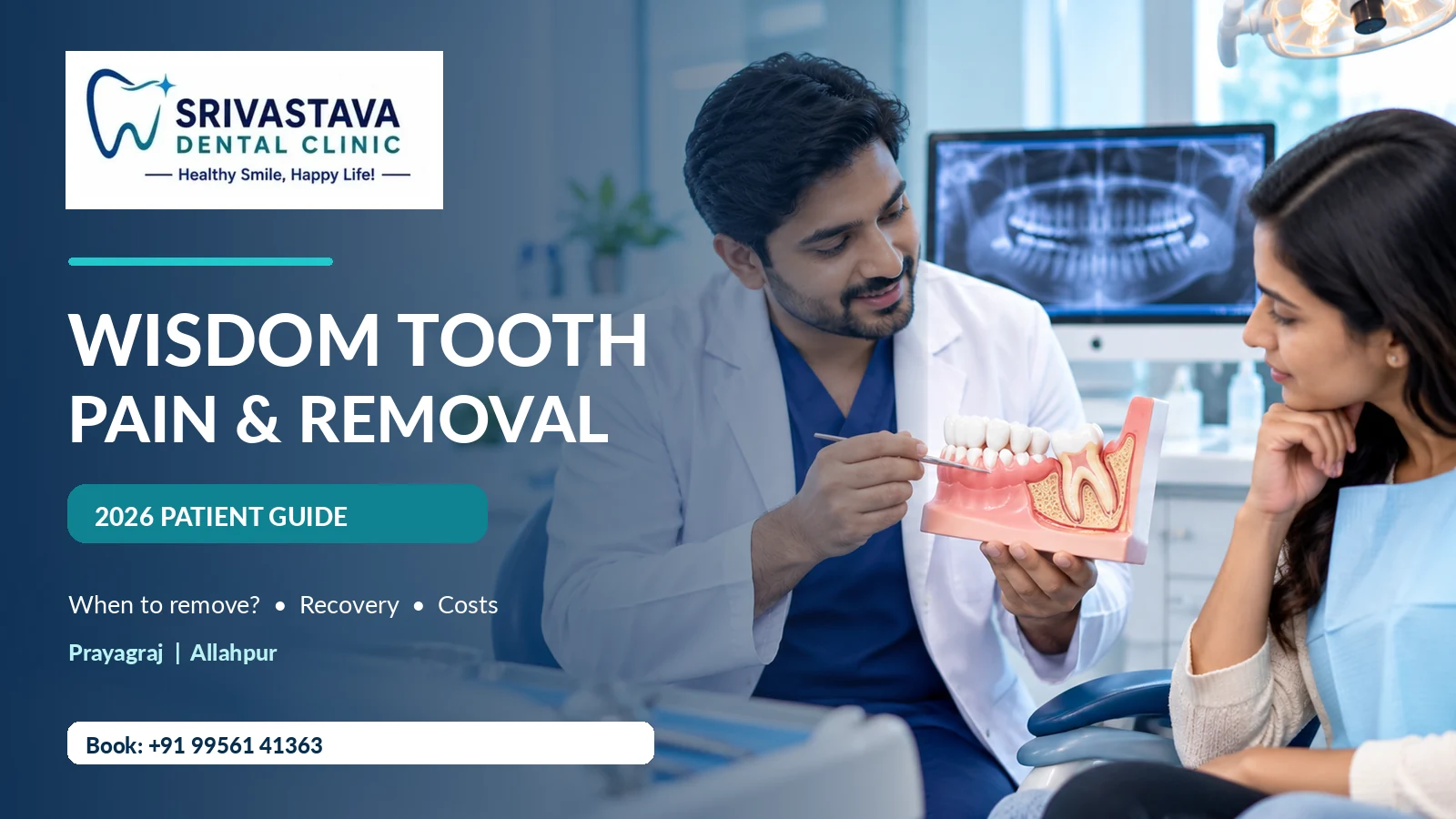
Wisdom Tooth Pain in Prayagraj (2026): When Is Removal Necessary?
Know the signs of an impacted wisdom tooth, when observation may be enough, when extraction should be considered, what happens during surgery, recovery advice and factors affecting cost.
Quick Answer: Must Every Wisdom Tooth Be Removed?
No. A wisdom tooth that is healthy, symptom-free and not damaging nearby teeth may be monitored rather than extracted. A dentist may recommend removal when there is recurrent infection, decay that cannot be treated, an abscess, cyst formation, or damage to the second molar. The choice depends on symptoms, examination and often an X-ray—not simply because the tooth is impacted.
For people searching “wisdom tooth pain near me in Prayagraj” or “wisdom tooth removal in Allahpur”, this guide explains how to decide what to do next. It is patient education, not an online diagnosis.
1. What Is an Impacted Wisdom Tooth?
Wisdom teeth, also called third molars, are the last permanent molars to develop, often becoming noticeable in the late teenage years or early adulthood. Some grow upright and can be cleaned normally. Others lack room or emerge at an angle, remain beneath the gum, or partly break through the surface. A wisdom tooth that cannot erupt fully is described as impacted.
Not every impacted tooth produces symptoms. However, partly erupted wisdom teeth may be difficult to clean because food, plaque and bacteria collect beneath an overlying gum flap. This can cause gum inflammation known as pericoronitis. In other situations, decay affects the wisdom tooth or the adjacent second molar. A dental examination helps distinguish these possibilities from pain caused by other teeth or jaw conditions.
Partially erupted
Some tooth is visible, but gum tissue may cover part of the crown. Cleaning difficulties can contribute to repeated inflammation.
Fully impacted
The tooth remains under gum or bone. It may remain symptom-free, although its relationship to neighboring teeth should be evaluated.
2. Seven Warning Signs of Wisdom Tooth Trouble
Symptoms do not prove the wisdom tooth needs extraction, but they indicate that an examination is worthwhile. Make an appointment if one or more of the following develop:
- Persistent pain at the back of the mouth: A dull ache or sharper pain near the last molar can occur with inflammation, decay or impaction.
- Swollen, red or tender gums: Inflamed gum tissue behind the second molar may signal pericoronitis.
- Repeated bad taste or bad breath: Food trapping and infection may cause an unpleasant taste or smell.
- Difficulty opening your mouth: Jaw stiffness, especially if worsening, needs prompt evaluation.
- Pain while chewing: A gum flap or inflamed tissues can become irritated by biting.
- Repeated episodes of swelling: Symptoms that settle and return may suggest an ongoing problem.
- Pain, cavities or gum damage in the neighboring molar: A poorly positioned wisdom tooth can complicate cleaning and affect the valuable second molar.
These warning signs are not exclusive to wisdom teeth. Root canal treatment, fillings, periodontal care or other treatment may be required for a different tooth.
3. When Should a Wisdom Tooth Be Removed or Monitored?
People often ask whether removing all four wisdom teeth prevents future trouble. Routine removal is not automatically necessary. Your dentist should consider the condition of the tooth, your symptoms, adjacent teeth, any previous infections, imaging findings and your individual health circumstances.
| Clinical finding | Possible approach | Why it matters |
|---|---|---|
| Healthy, fully erupted tooth | Usually maintain and clean | It may function normally without needing extraction. |
| Impacted but disease-free | Monitoring may be appropriate | Extraction has risks and no universal benefit. |
| First mild gum infection | Assess and treat inflammation | One episode alone does not always justify removal. |
| Repeated pericoronitis | Discuss extraction | Recurrent infection can make definitive treatment preferable. |
| Untreatable decay or abscess | Extraction may be indicated | Active dental disease needs definitive management. |
| Second molar damage or cyst | Specialist assessment and treatment | The plan should protect adjacent structures. |
Clinical guidelines differ in emphasis, particularly for asymptomatic teeth that might develop future disease. Decisions should therefore be individual and explained clearly, including the risks of both removing the tooth and monitoring it. A recommendation should not be based only on age, appearance or fear that all wisdom teeth are dangerous.
4. How Dentists Assess a Painful Wisdom Tooth
At a consultation, your dentist will ask when the pain started, whether swelling or fever occurred, how often symptoms return and whether you have health conditions, medicines or allergies that affect dental treatment. The examination checks the tooth, overlying gums, cleanliness, the adjacent molar and how far you can open your mouth.
- Clinical examination The dentist checks whether the pain comes from the wisdom tooth, gum infection or another dental problem.
- Dental imaging when indicated An X-ray can help show tooth angle, depth, roots and neighboring teeth. Extra imaging is considered only if clinically necessary.
- Discuss treatment choices Options might include local cleaning and self-care advice, monitoring, treatment of a separate decayed tooth or extraction.
- Explain individual surgical risks If the tooth is close to a nerve or other important structures, your dentist may discuss referral to an oral surgeon and alternative procedures.
- Provide a personalized aftercare plan Any surgery plan should include medicines, eating instructions, follow-up and warning signs requiring review.
Contact Srivastava Dental Clinic's wisdom tooth treatment service in Allahpur for a consultation and to check availability of treatment and imaging.
5. Simple Extraction vs Surgical Removal
A wisdom tooth that is fully visible and accessible may sometimes be removed using a simple extraction. A tooth trapped beneath gum or bone may need a surgical approach. Your clinician will explain the appropriate method before any procedure.
Simple extraction
- Typically for accessible teeth
- Local anesthesia is commonly used
- Tooth is carefully loosened and removed
- Aftercare protects the healing socket
Surgical extraction
- May require opening gum tissue
- Bone removal or sectioning may be needed
- Stitches may be placed
- Complex cases may need a specialist
With appropriate anesthesia, pain during removal is reduced substantially, but pressure and movement can still be felt. Soreness, swelling and limited mouth opening after the procedure are possible. No responsible clinician can promise an entirely painless or zero-risk procedure for every patient.
Lower wisdom teeth sometimes lie near nerves that supply sensation to parts of the lip, chin or tongue. Temporary changes in sensation can occur; persistent nerve injury is less common but important to discuss. In selected difficult cases, a specialist may recommend a procedure such as coronectomy, which removes the crown while leaving roots in place, if that is safer and clinically suitable.
6. Recovery After Wisdom Tooth Removal: A Practical Timeline
Healing differs between people. Simple removals may cause relatively little disruption; deeper surgical removals can cause more swelling, stiffness and soreness. Follow the instructions given by your treating clinician because they take priority over generalized timelines.
| Time | What may happen | Recommended care |
|---|---|---|
| First 24 hours | A clot forms; mild bleeding or discomfort is possible. | Rest, bite on gauze if instructed, avoid smoking and vigorous rinsing. |
| Days 2–3 | Swelling, tenderness or jaw stiffness may be noticeable. | Use prescribed advice, maintain fluids and eat soft foods. |
| Days 4–7 | Pain and swelling should generally start settling. | Gently clean as directed and attend review if symptoms worsen. |
| 1–2 weeks | Many day-to-day symptoms improve; healing continues. | Return to normal foods and activity gradually as tolerated. |
| Following weeks | The deeper socket continues to heal. | Keep follow-up appointments if recommended. |
Important aftercare do's and don'ts
- Take pain relief or other medicines only as recommended by your clinician.
- Choose cool or lukewarm, soft foods until chewing is comfortable.
- Drink water regularly; avoid strong suction and disturbing the clot.
- Do not smoke; smoking increases healing problems.
- After the initial period, rinse gently if your dentist advises this.
- Contact your dentist if bleeding does not settle, pain worsens or infection is suspected.
7. Wisdom Tooth Removal Cost in Prayagraj: What Affects the Fee?
The price of wisdom tooth extraction in Prayagraj cannot be accurately determined from the tooth's name alone. Clinics may quote different fees for a straightforward extraction and a deeply impacted tooth requiring surgery, imaging, medicines or specialist referral.
- Tooth position: Fully erupted, partly erupted or deeply impacted teeth can require different approaches.
- Root anatomy: Curved roots, proximity to nerves and adjacent tooth structures may increase complexity.
- Imaging: The number and type of clinically indicated X-rays influence the final assessment.
- Anesthesia and setting: Local anesthesia, sedation suitability or specialist facilities can affect planning and cost.
- Aftercare: Prescribed medicines, follow-up or complications may change overall expenses.
Before consenting, ask for a written or clearly explained estimate that distinguishes consultation, imaging, surgery, medication and review charges. We have not published a fixed clinic price because an exact estimate must be confirmed after your consultation.
8. Wisdom Tooth Pain Today: What Can You Do Before Your Appointment?
If you have pain without emergency warning signs, practical steps can help you remain comfortable until your examination. Gently clean the surrounding teeth and avoid probing under swollen gums with sharp objects. Choose soft foods and try chewing on the other side. A pharmacist or clinician can advise whether an over-the-counter pain medicine is appropriate for you.
Warm salt-water rinses may be useful for some gum irritation, but do not aggressively rinse a fresh extraction wound. Avoid placing aspirin directly on the gum. Do not start antibiotics without a prescription: many dental infections need treatment of the cause, and antibiotics are not automatically indicated for every case of pain.
Do not wait if symptoms include spreading swelling, fever, feeling unwell, or increasing difficulty opening the mouth. Difficulty breathing or swallowing needs immediate emergency care. The right treatment may be local management, extraction or treatment of a different tooth.
9. Wisdom Tooth Consultation in Allahpur, Prayagraj
Srivastava Dental Clinic is located on Shiv Nagar Road near Kundan Guest House, Allahpur, Prayagraj, Uttar Pradesh. The clinic website lists wisdom tooth removal, dental X-ray assessment and other general and restorative dental services. Dr. Ankur Srivastava is listed as a BDS dentist and implantologist.
Patients from Allahpur, Shiv Nagar, Katra, Civil Lines, George Town, Tagore Town and nearby areas can contact the practice to discuss a suitable dental appointment. This article does not imply that every patient requires removal or that a particular surgical method will be offered without prior assessment.
Related treatment information: Wisdom Tooth Removal · Root Canal Treatment · Contact the Clinic.
10. Frequently Asked Questions (12 FAQs)
1. Does every impacted wisdom tooth need removal?
No. An impacted wisdom tooth may be monitored if it is healthy, symptom-free and not causing damage. Whether to remove it depends on clinical findings and individual risk. Your dentist may recommend regular review and imaging where appropriate.
2. What are the first signs of wisdom tooth infection?
Pain behind the last molar, red or swollen gum tissue, an unpleasant taste, food trapping and difficulty chewing may be signs of inflammation or infection. Fever, spreading facial swelling or increasing jaw stiffness need urgent evaluation.
3. How do I know if my wisdom tooth is impacted?
A tooth may be partly visible, angled or not visible at all. Symptoms and a mouth examination alone do not always show the full position. Your dentist may use an X-ray to assess impaction and the relationship to adjacent structures.
4. Can wisdom tooth pain disappear without surgery?
Some mild gum inflammation improves with careful cleaning and appropriate dental care. However, disappearing pain does not prove the cause has resolved. Recurrent symptoms or known decay need follow-up to avoid repeated problems.
5. Is wisdom tooth removal painful?
Local anesthesia generally reduces pain during the procedure, although you may feel pressure. Some discomfort, swelling and jaw stiffness during recovery can occur. Discuss anxiety, medical history and pain control with the dentist beforehand.
6. How long does wisdom tooth extraction take?
Time varies considerably according to access, root position, degree of impaction, imaging findings and surgical approach. A straightforward tooth may be removed quickly; a difficult impacted tooth can take longer. Ask your clinician for a case-specific estimate.
7. What is the recovery time after wisdom tooth surgery?
Many people resume light daily activities within a few days, but more complicated procedures can require extra recovery time. Swelling, soreness and jaw stiffness may last days and gradually improve. Complete socket healing takes longer than the initial comfort period.
8. How much does wisdom tooth removal cost in Prayagraj?
Charges depend on whether extraction is simple or surgical, tooth position, required imaging, specialist involvement and follow-up. Contact Srivastava Dental Clinic for an examination and individualized estimate rather than relying on an unverified fixed price.
9. Can I eat normally after wisdom tooth removal?
Start with soft foods once your dentist says it is appropriate and the effects of anesthesia have worn off enough to eat safely. Avoid hard, crunchy or irritating foods until comfortable. Your dentist may recommend changes based on the surgical site.
10. Are antibiotics necessary before or after removal?
Not routinely. Antibiotics are indicated for certain infections or circumstances based on clinical judgment. They do not replace treatment of the source of infection. Use them only if prescribed and follow the prescribed instructions.
11. When is wisdom tooth pain an emergency?
Rapidly spreading swelling, trouble breathing or swallowing, or severe systemic illness requires emergency medical evaluation. Persistent bleeding, fever, severe swelling or pain that keeps worsening after extraction also deserves urgent professional assessment.
12. Where can I book a wisdom tooth check-up in Allahpur?
Srivastava Dental Clinic is at D, Basement, Balia House, 23/47/163, Shiv Nagar Road, near Kundan Guest House, Allahpur, Prayagraj 211006. Call +91 99561 41363, +91 63064 67346 or +91 87070 02541 to enquire about appointments.
Wisdom Tooth Pain? Get the Right Diagnosis.
Speak with Srivastava Dental Clinic, Allahpur, Prayagraj about a dental examination, treatment choices and an individualized estimate. An examination is needed before deciding whether removal is appropriate.
Address: D, Basement, Balia House, 23/47/163, Shiv Nagar Rd, near Kundan Guest House, Shiv Nagar, Allahpur, Prayagraj, Uttar Pradesh 211006.
Additional numbers: +91 63064 67346 • +91 87070 02541
Email: ankurluvmoney@gmail.com
Website: srivastavadentalclinic.com
Medical References & Disclaimer
The guide was prepared using established guidance and updated clinical information. External resources offer general education and do not replace individualized dental assessment.
- NHS — Wisdom Tooth Removal: Indications, Procedure, Recovery and Complications
- NICE TA1 — Guidance on the Extraction of Wisdom Teeth
- American Dental Association — Wisdom Teeth
- Ashford & St Peter's Hospitals NHS — Mandibular Wisdom Tooth Removal Information (2026)
- International Journal of Oral Science — Expert Consensus on Third-Molar Health (2026)
Published/updated 29 October 2026. Educational content only; not a diagnosis, price quote or promise of outcomes. Clinical approval from Dr. Ankur Srivastava is recommended before publishing.

